Technology is never neutral.
It hands out visibility, control, opportunity and dependence. 027B writes about who gets what.
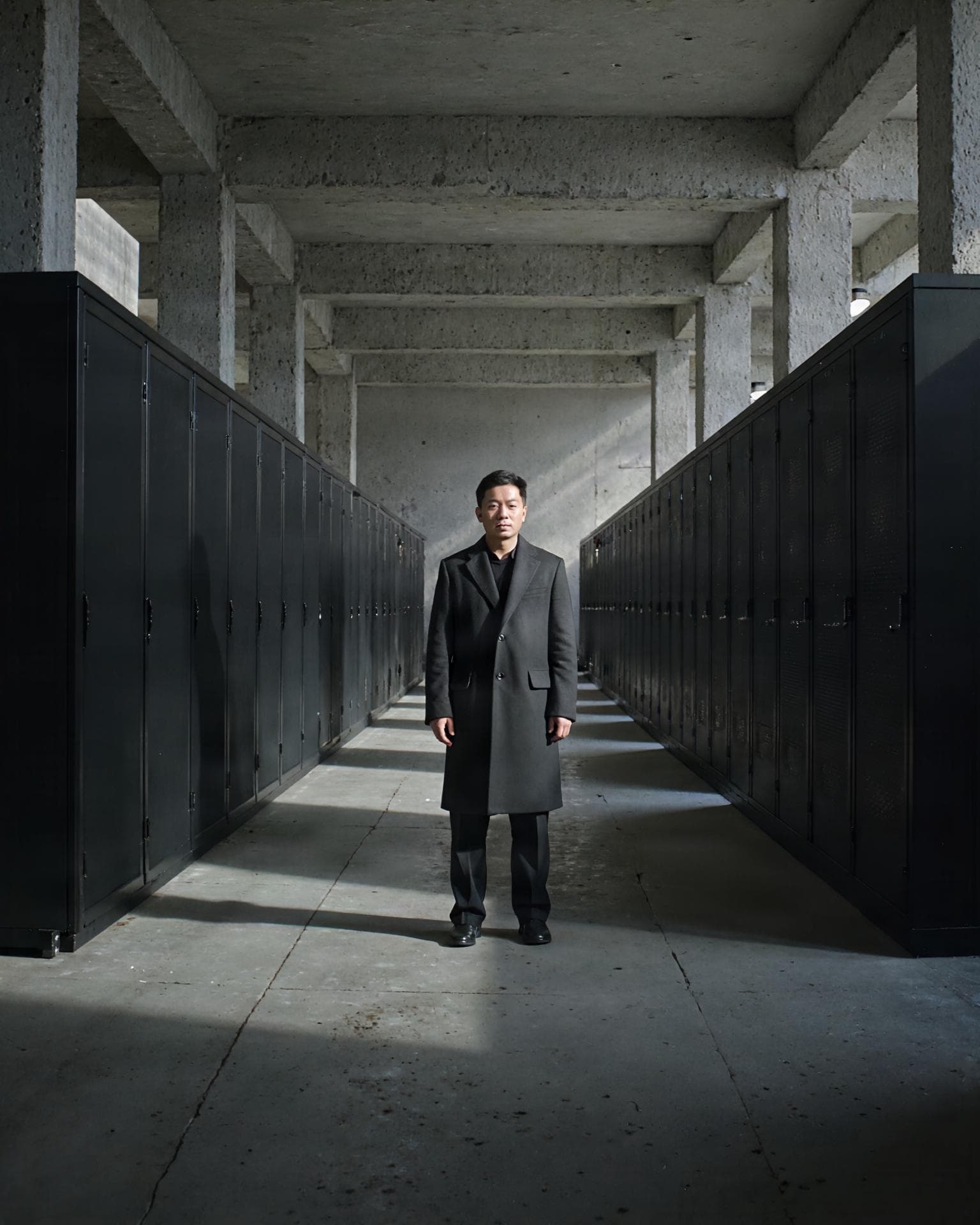
Who profits? Who decides? Who pays?
Why 027B exists
A lot gets written about technology, mostly about what a new product can do. Far less about what it does to the people who use it, pay for it or can no longer get rid of it. That gap is the reason for 027B.
A falling price per token says nothing yet about what a finished task costs. A frictionless interface sometimes removes disagreement along with the friction. Whoever sets the standard often sets the room everyone else has to move in. Sentences like these rarely appear in press releases. They come at the end of the reporting.
So we start with something you can point at: a pricing model, a data centre, a default setting in a menu. Then we ask three questions. What actually works? Who wins, and who carries the risk? And where can you see it?
You don't need to write code to read any of this. We write for people who build systems, decide about them or live with their consequences. Which is quite a lot of people. All you need is patience for an answer that takes a little longer.
Pieces appear when they are finished. There is no schedule to keep up with and there is no breaking news.
The writing can be sharp. The claim has to hold.
What 027B sounds like
- »A low token price says nothing yet about the cost of a finished task.«
- »Good interfaces remove friction. Sometimes they remove disagreement with it.«
- »Whoever sets the standard often sets the room to move.«
What it doesn't
- This AI revolution changes EVERYTHING.
- 5 things you need to know RIGHT NOW.
- Only we understand what is really going on.
- The truth nobody dares to say.
Precise, not grandiose. Specific, not sweeping. And conditional when the evidence runs out.
What we write about
Five fields, one way of looking. We care less about the subject than about the conflict inside it.
- SystemsSoftware, platforms, infrastructure. When does convenience turn into dependence?LatestThe Invisible Grid
- IntelligenceModels and agents. What can AI really do, and what does it cost in the end?LatestThe Cost of Intelligence
- CapitalPrices, business models, labour. Who pays for the low price, and for how long?LatestOpen, Until It Matters
- BehaviourIncentives, habits, adaptation. What makes people act differently?LatestA More Efficient Obedience
- OrderStates, rules, sovereignty. Which dependencies form without anyone deciding on them?LatestManufactured Consensus
Sometimes as a long essay, sometimes as a short note. Now and then as a dossier in several parts, a conversation or a photo essay about a single object.
What you can expect from us
Every figure has a source.
With a date and an origin, so you can check it yourself.
You can tell where we take a view.
Facts, inferences and opinion are kept apart. A pointed headline is not a licence.
We look for the best counter-argument.
Contested claims have to stand up to the strongest objection we can find. Not the most convenient one.
We say who is behind it.
027B is published by Balane GmbH in Munich. If a subject touches our projects or business relationships, the piece says so.
Our images are not evidence.
Most are concept images made with Bria. They are labelled and never show a real event.
We let you read in peace.
No account, no ads, no cookies. We only count which pieces get read: anonymously, on our own server.
Why 027B?
In ASCII, 27 is the code for Escape: the key that interrupts a running program. The B stands for Balane.
And then there is “Brazil”, Terry Gilliam's 1985 film. The Central Services repairmen demand form 27B/6 for every job, while the heating engineer Harry Tuttle simply fixes things. A system that mostly administers itself, and someone who sees through it: we can't describe what we are doing here much better than that.
Spoken, it is “twenty-seven B”. You write the zero, you don't say it.
Write to us.
Tips, corrections and disagreement are welcome. Disagreement especially.